


Trust in Health Tourism: The Most Valuable Capital of a New Era

Last week, we discussed sustainability in health tourism and concluded with these words:
“The future of health tourism will be shaped not only by technology or investment, but by countries that can build trust.”
Today, I would like us to consider why that trust is the most valuable capital in health tourism.
Health tourism differs from other sectors. People may make a mistake when buying a car, be disappointed with a hotel, or exchange a product they do not like. But when health is involved, a decision often directly affects a human life. Its consequences also extend beyond the patient. Negative experiences can cause significant damage to a country’s international reputation and healthcare brand.
For this reason, an international patient’s first priority when choosing a country for treatment is trust.
Of course, price matters. Technology matters. The physician’s experience matters. Yet above all of these stands an invisible value:
Trust.
Our work across different regions over the years has shown me an important truth.
Trust is not built in the same way in every country.
Imagine opening a representative office or patient coordination office in the United States. Even if everyone working there is a professional from Türkiye, establishing trust at the outset will take time. The American healthcare system rests on strong institutions, local references, legal safeguards and brand perceptions built over many years. Being good is not enough; you must demonstrate that quality in a way the local community will accept.
In contrast, the dynamics of trust are different in the Turkic states, the Middle East and much of Africa. Shared history, cultural affinity, human relationships, cooperation between states and personal references can significantly accelerate the process.
Europe has a different structure again.
Here, cultural affinity alone does not create trust. Accreditation, international quality certifications, scientific publications, digital visibility, patient experiences, legal frameworks and institutional transparency play decisive roles in decision-making.
There is therefore no single model of trust in health tourism.
Each region has its own sociological, cultural and economic dynamics.
This is precisely why success depends not only on building good hospitals, but also on understanding the target market correctly.
It is unrealistic to expect to succeed throughout the world by approaching every country in the same way.
This is one reason some of our institutions struggle in international markets today. Marketing strategies are often shaped by our own habits rather than the expectations of the countries we seek to reach.
Trust, however, is built by understanding the target country’s culture, analysing its expectations accurately and developing long-term relationships.
Health tourism is no longer simply a sector that provides treatment. It is also an instrument of health diplomacy that builds bridges of trust between countries. When a country is trusted, patients are not the only ones who come. Investment follows. Academic cooperation develops. Scientific projects increase. Knowledge exchange between health professionals grows stronger. International brand value rises. That is why trust is health tourism’s most valuable capital.
Unfortunately, this capital cannot be bought through advertising campaigns. It is built over years, yet can be lost very quickly through poor practice, inadequate communication or unethical behaviour. Trust resembles the relationship a father builds with his child. It takes years of effort, but one mistake can quickly damage what has accumulated over that time. Once trust is lost in health tourism, rebuilding it is extremely difficult.
Türkiye has gained an important advantage through its strong healthcare infrastructure and skilled workforce. Our greatest goal now is to turn that advantage into lasting international trust. The winners in the future of health tourism will be countries where international patients can confidently say, “I trust this country,” rather than simply those with the largest hospitals.
In our next article, we will consider how a health tourism brand is built through trust, quality and sustainability, as well as promotion.
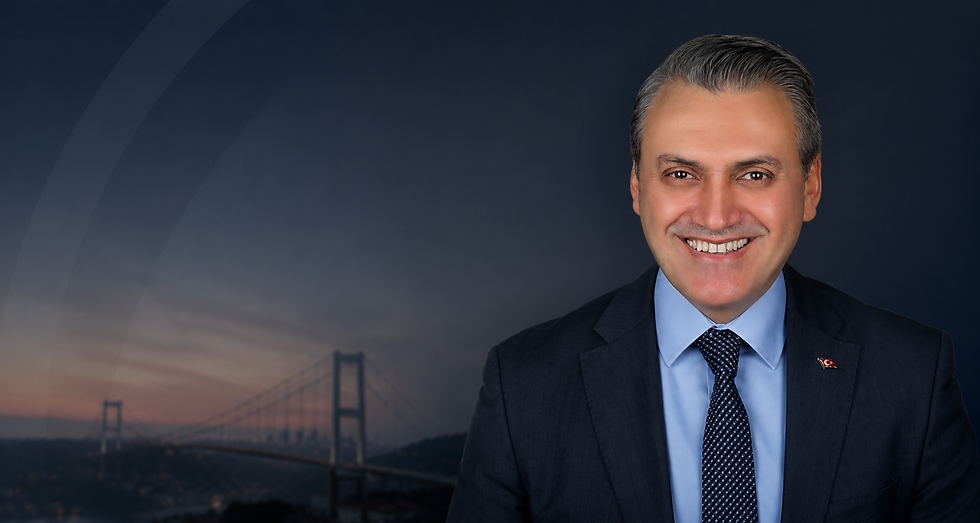
Behlül Ünver President, World Health Tourism Platform
Comments